

Originally Irish patriots would wear shamrocks on their clothing in honor of Saint Patrick. They would stuff the clover in a pocket or pin it to the chest area of a jacket, shirt or sweater. Or as in the photo above, affix it to a beret or hat. Over time that tradition evolved into wearing pretty much anything green.
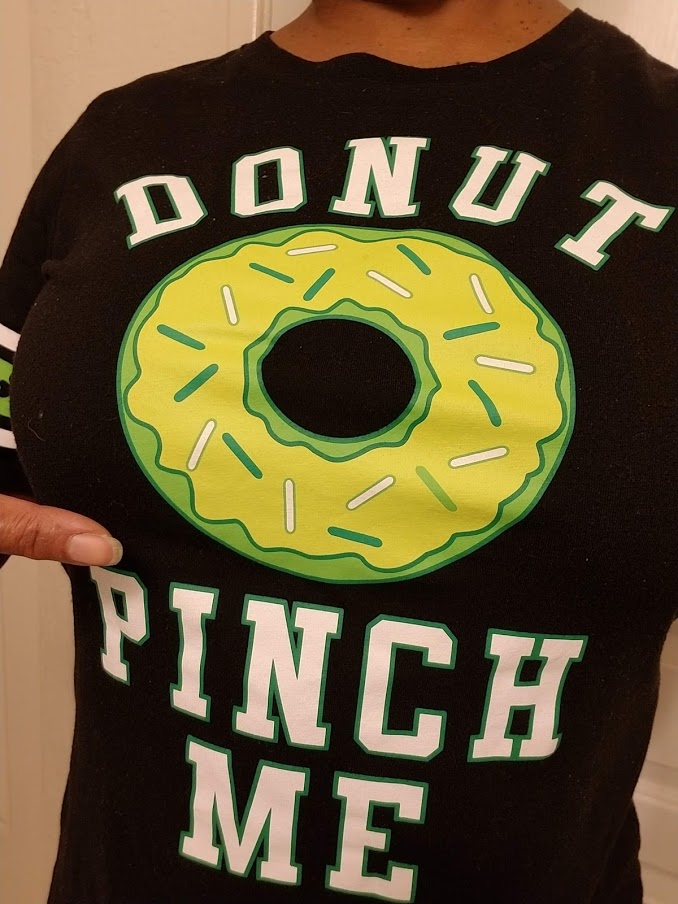
What’s all this pinching about? Boy I hate that! I remember being totally oblivious about this tradition in elementary school. One St. Patrick’s Day, probably around the fourth grade, several of my friends who were “in-the-know” took turns running up beside me to physically remind me that I wasn’t in compliance with the holiday’s dress code. Mind you, these weren’t polite little nips. They were the grab as much skin as possible and twist really hard kind of pinches that left bruises for days. Needless to say, after that first painful reminder I never forgot to wear green on St. Patrick’s day again. I was super psyched to find this spot on t-shirt during one of my recent thrift shopping adventures!
We’re not Irish… But as far back as I can remember, my mom would make a special effort to shop for and prepare what we (Americans) believed to be traditional Irish fare to serve for dinner on St. Patrick’s Day. Yes, corned beef, cabbage and potatoes. I never really questioned whether this was an authentic Irish meal. I just assumed that it was because my mom said so. I did, as most children do and just took for gospel what our parents told and taught us. My first serious affront to this “traditional” meal was from my boyfriend in the early 1990s, who just happened to be a real Irishman – from Belfast, Northern Ireland.
I was so excited to cook an “Irish” meal for an Irish person. So I did what my mother had taught me to do to honor this holiday. I went grocery shopping (in secret) and bought all of the trappings so that I could surprise him with what I thought would be a nostalgic meal. When dinnertime arrived, I set the table with candles and a few Irish themed favors and proudly announced that dinner was served. He sat down and looked at his plate and said, “You know we don’t eat this in Ireland on St. Patrick’s Day”. Shocked and a bit hurt, I asked him what did the Irish eat on this holiday. He said his family ate fish and chips, as his mother was not a great cook so his father would stop to pick up the newspaper wrapped fried delicacy on his way home from the pub. But he also named food I’d never heard of – teddy farls, champ, pasties and soda bread. Nevertheless, he ate it, declared it delicious, and I’ve cooked it every year since for our St. Patrick’s Day dinner.
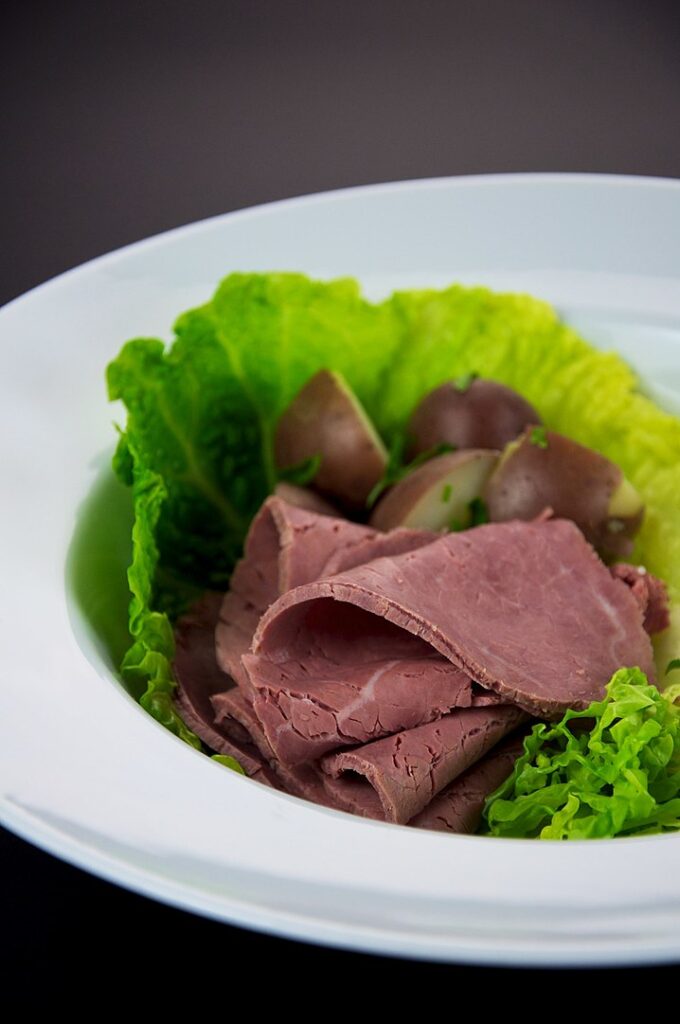
Not only did my boyfriend’s family not eat corned beef and cabbage on St. Patrick’s Day. They never ate it! It turns out that this iconic meal of corned beef, cabbage and potatoes is actually Irish-American. It was the closest thing to their traditional foods the first Irish immigrants could get their hands on here in the United States. Customary fare was boiled bacon. But pork was too costly in America, so beef brisket, one of the least expensive cuts of beef was used instead. Thanks to Eastern Europeans’ sharing their knowledge of preserving meats – it was pickled or “corned” and served with cheap sides such as cabbage and potatoes and sometimes carrots. And no Irish or Irish-American meal would be complete without a nice grog to wash it all down.
But why would anyone want green beer? Heaven knows we put more than enough unhealthy things in our bodies. So do we really need to add green food coloring into the mix? I’m not a great beer fan anyhow and changing its color to green makes it even less appealing to me. But I digress. What I really want to explore is the reason why we feel the need to drink ourselves silly on St. Patrick’s Day. It seems that the custom goes back to the Catholic Church’s lifting of lent restrictions to allow parishioners to celebrate the holiday. Many Catholics would don their shamrocks, attend mass in the morning and then convene at the local pub after church – often with the priest leading the procession there. Once inside the tradition was to remove the shamrock from one’s attire and drop into the glass. After consuming the last of the spirits, the shamrock would be thrown over one’s shoulder for luck.
So one may assume that since alcoholic bevvies were forbidden during lent, some would go overboard because they knew they wouldn’t get a chance to quench their thirsts again until early April. Today celebrants of any faith and those who have no faith at all are encouraged to be Irish if only for a day to acknowledge the contributions of St. Patrick and help fill the coffers of myriad international companies that make billions off of the commercialization of this holiday.
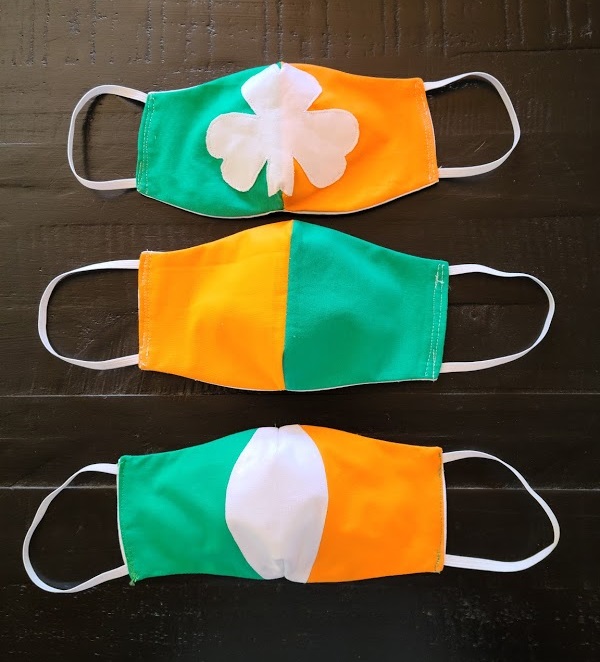
Well that brings us up to date. This will technically be the second St. Patrick’s Day that we celebrate during this COVID-19 pandemic. Though only the first with widespread restrictions in place for mask-wearing and social distancing. I made the masks below for my husband, yes that guy who was my boyfriend back in the early 1990s, several months ago because he likes showing his national pride everyday. Had I known we would still be under COVID restrictions, I would’ve devised some sort of straw hole, possibly with a flap… so he could enjoy a wee dram without removing his mask! Be Safe – Slàinte Mhath!
Attributions
Header Photo: Irish Defense Forces: UN Beret with Shamrocks
_(2).jpg%22%3EIrish%20Defence%20Forces%20from%20Ireland%3C/a%3E,%20%3Ca%20href=%22https://creativecommons.org/licenses/by/2.0%22%3ECC%20BY%202.0%3C/a%3E,%20via%20Wikimedia%20Commons)
Do Not Pinch Me Photo: Aleta Campbell
Background Information: Delish.com
Corned Beef and Cabbage Photo: The Culinary Geek
Irish Face Masks Photo: Aleta Campbell